Earth passed through Interstellar Cloud
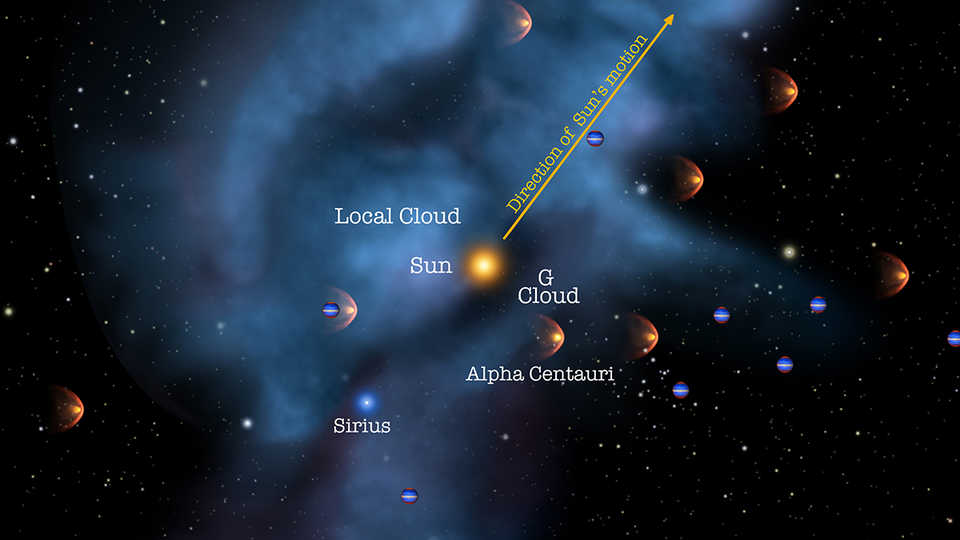
June 11, 2024. A team of astronomers from Boston University, Harvard University, and Johns Hopkins University detected evidence that our Solar System passed through an interstellar cloud between two and three million years ago, interfering with the regular effects of solar radiation. This period left trace elements all across the globe, also exposing the Earth to high levels of cosmic radiation, and may have triggered an ice age, stressing ecosystems.
"Ice ages are caused by a variety of variables, including our planet's tilt and rotation, carbon dioxide levels in the atmosphere, changing plate tectonics, and volcanic eruptions on its surface. However, given the time when scientists believe Earth was exposed to interstellar space, this study shows our solar system's position in our home galaxy may create extreme shifts in our planet's temperature" - Space.com: interstellar cloud may have caused an ice age on Earth
This discovery and many other similar events in geological history demonstrate that the solar system is not as isolated as previously believed, events in the wider universe continue to affect our planet as well as the life on it. Explanations of creation must include this larger context to be accurate and effective.
Diagram showing our solar systems present location and surroundings