Earth and Solar history
June 2024
The history of the Earth is very detailed for both life forms and geology. Scientific discovery sometimes requires counting individual atoms in a sample. While microfossils record the growth and demise of whole ecosystems. Progress is easy, given the variety of evidence and the fossils beneath our feet.
Astronomy is handicapped in comparison. All Astronomers have is light and its spectrum given off by various materials in deep space. Yet when it comes to the origin of our solar system, there are both visible examples and tangible evidence in the form of meteoroids and asteroids.
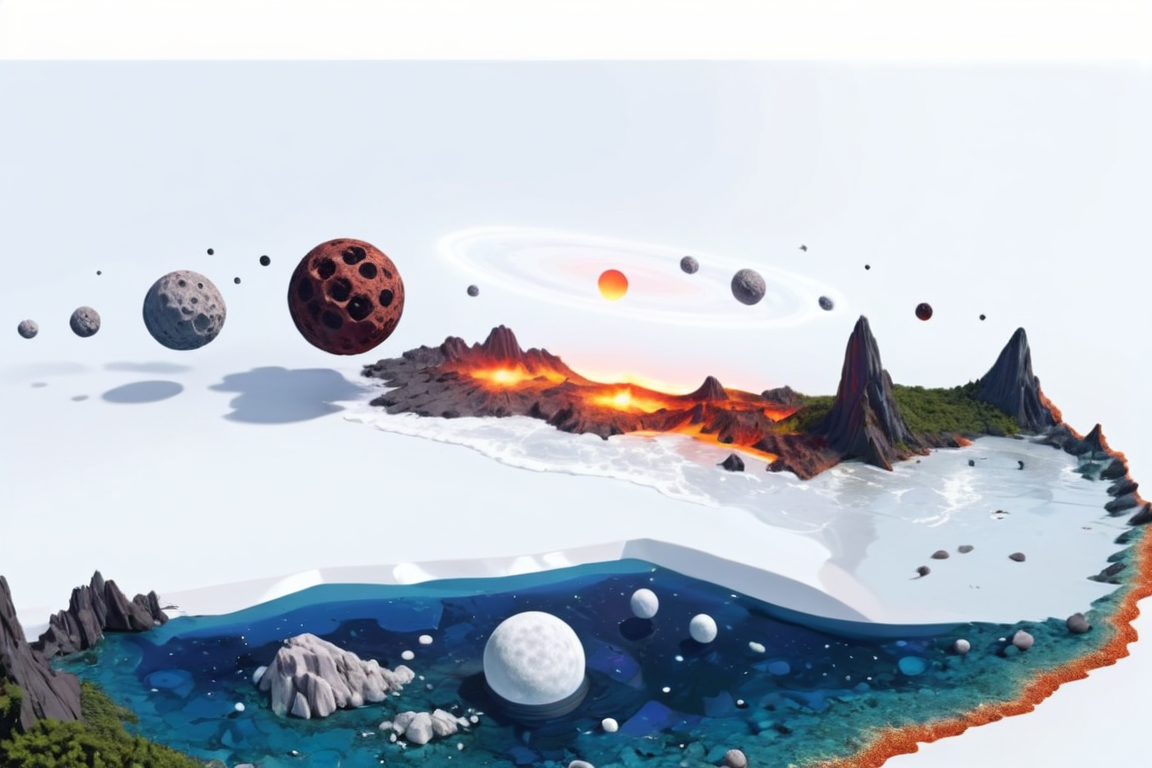
The ancients thought that the creator put the planets in motion by creating independent crystal spheres. Fortunately, nature is not confined by human mythologies or aesthetics.
Why do all the planets in our solar system revolve on a single flat plane around the sun? If they were produced individually, there is no reason why they should not have different orientations. If they each had a separate plane of rotation, their orbits would be very stable
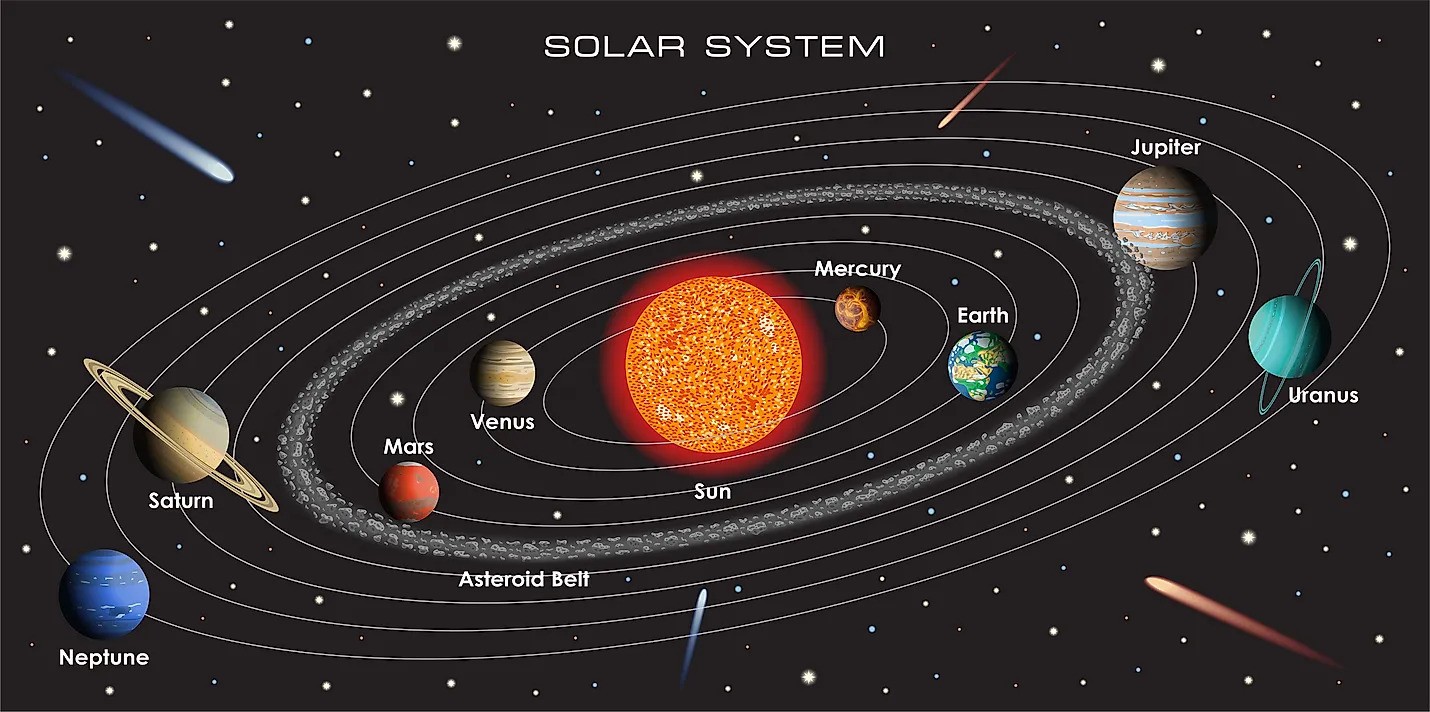
As it is, their gravity constantly disrupts the asteroids. These are leftovers from the solar system's early years. In the past, planets orbits have shifted, creating chaos. One example is the region between Mars and Jupiter. Without random changes of this kind, puny Mars would have been Earth sized or larger and perhaps supported life.
We may learn a lot about our own history by studying the formation and death of other solar systems. Other solar systems show the conditions of our own in its early years and the distant future. The evidence exists in the earliest grains of ice and dust found in comets. In the gasses that created giant planets, the rocks and water of Earth. The solar system's history is rich and complicated. Our sun's matter and the planets are about 100 generations away from the first stars in our universe. Since each generation of stars changes the composition of the matter it inherits. So there are immense issues to be addressed. That complexity is evident even on our own moon. It has a far side that is very different from the side we view every night. Our moon hides secrets from the early solar system that science has uncovered.
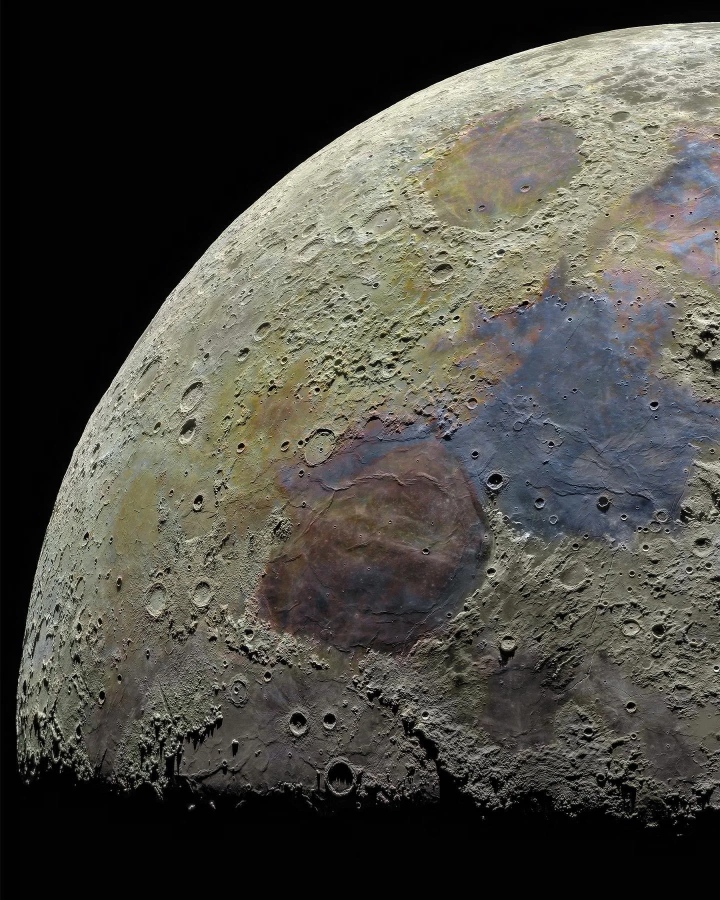
Astronomers observe new stars forming, exploding and reforming wherever they turn their telescopes throughout our universe. Each star is somewhere in its lifecycle from a collapsing nebular of dust and gas to dim old age. The content of recent stars, including our own, show their material came from earlier generations of stars. The history of our solar system is also consistent with other planets we can observe around distant stars.
The balance of elements in a star comes from these natural galaxy wide cycles. Carbon is formed in stars as part of the second-level fusion process after hydrogen is fused together. Magnesium, is produced by the third stage fusion of carbon with helium. Heavier elements like iron are the final result of many atomic mergers. Early in our universes' history, first-generation stars exploded as high-powered supernovae, but some exploded with much lower energy. These low-energy supernovae added elements such as carbon and magnesium to deep space, but not much iron. The balance of elements in a star reveals its ancestors, its age and birth location within a galaxy. It also shows the development of the universe as a whole.
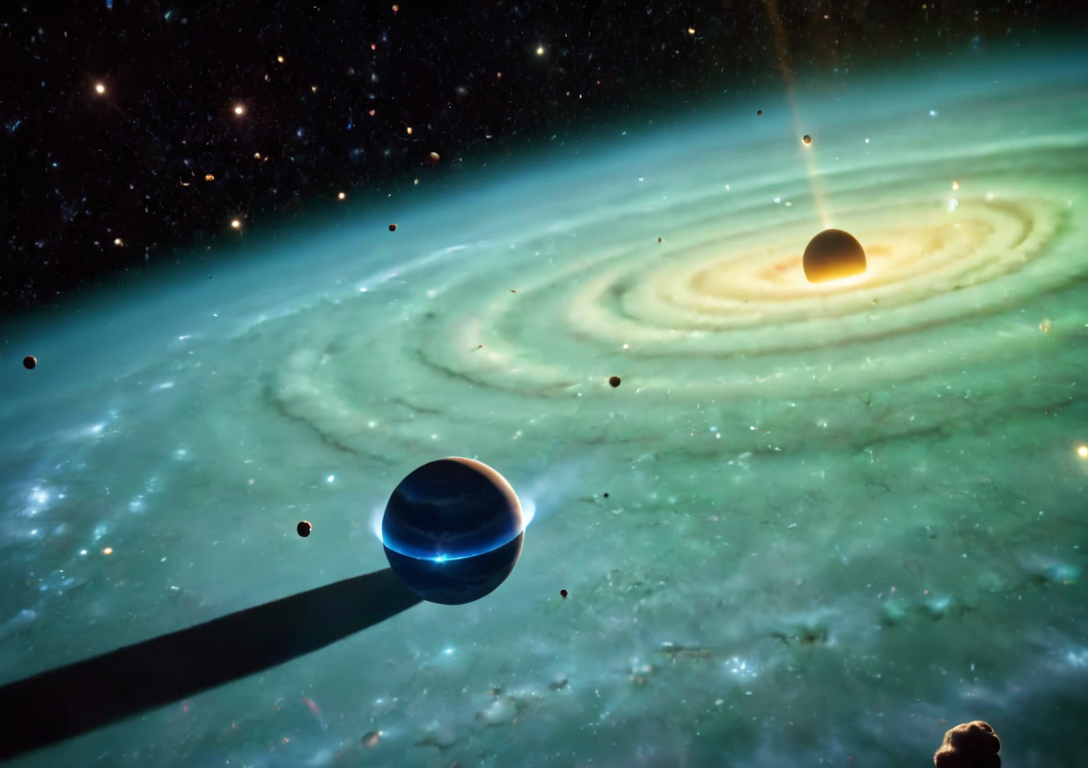
Human technology lept forward with the invention of the wheel. Long before that, nature made our solar system from a vast wheel of gas and fragments of rock. Like a potter shaping clay, the beginning was an irregular blob of gas and dust set spinning in deep space. Although visible from far away, these clouds are still mostly empty. Only about one percent solid. So really more like a fog than the regular matter we are used to. Still, there are vast amounts of material in these structures. Even more material is attracted to the disk by gravity. Once, it forms from the interstellar medium. At first, it doesn't have any star to light its centre. The forces of gravity and rotation form a vast wheel. Its size is larger than we can easily imagine. Most of its material is destined to fall into the central star that will grow at its heart. However, there will be plenty left over. Those leftovers will make planets and smaller objects.
The image below is a forming solar disc seen edge on. Nicknamed 'Dracula's Chivito' or Dracula's sandwich, its formal name is IRAS 23077. It was discovered accidentally by astronomers who were searching for distant galaxy sized black holes. It is located about 1000 light years away in the direction of the constellation Cepheus in the far northern sky. This growing solar system is bright, illuminated by the baby star at its centre. That star puts out about 11 times more light than the sun. The whole disc takes up a vastly larger area than our own home solar system. It's 40 times wider than our solar system or six hundred, forty-three billion kilometres across. Currently, it is the largest known Protoplanetary Disc discovered as of 2026. The disc is so large that there may be a pair of stars orbiting at its centre, and it contains more material than 10 to 30 Jupiter sized planets.
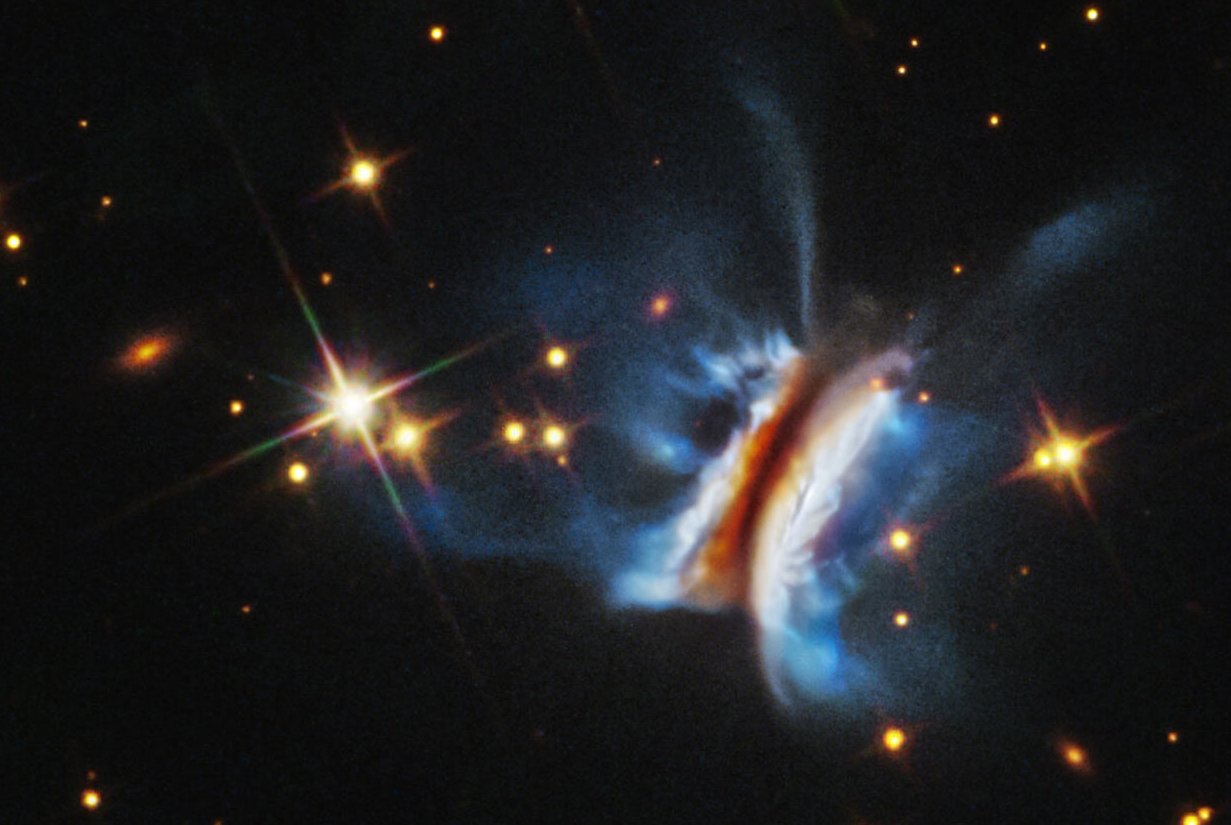 Image: NASA, ESA, STScI, Kristina Monsch (CfA); Image Processing: Joseph DePasquale (STScI)
The whole structure is rotating slowly around its star. That demonstrates that it is a forming solar system rather than the nebula left by an exploded dying star. The whole disk structure is unusually chaotic, with bright wisps of material extending far above and below the disk. Our own solar system would have looked something like this, but on a smaller scale. It has very asymmetrical concentrations of matter, which suggests a complex and wild origin.
What's important to understand is that the final system of planets will be completely random, although shaped by the wind of light and particles from the star. That is why we often discover gigantic planets called hot Jupiter's orbiting very close to their star or burning up in its outer layers. Nothing found in space is carefully-ordered or static.
Below are just some well known examples for comparison, some seen edge on and others facing towards Earth.
Proto-planetary Discs.
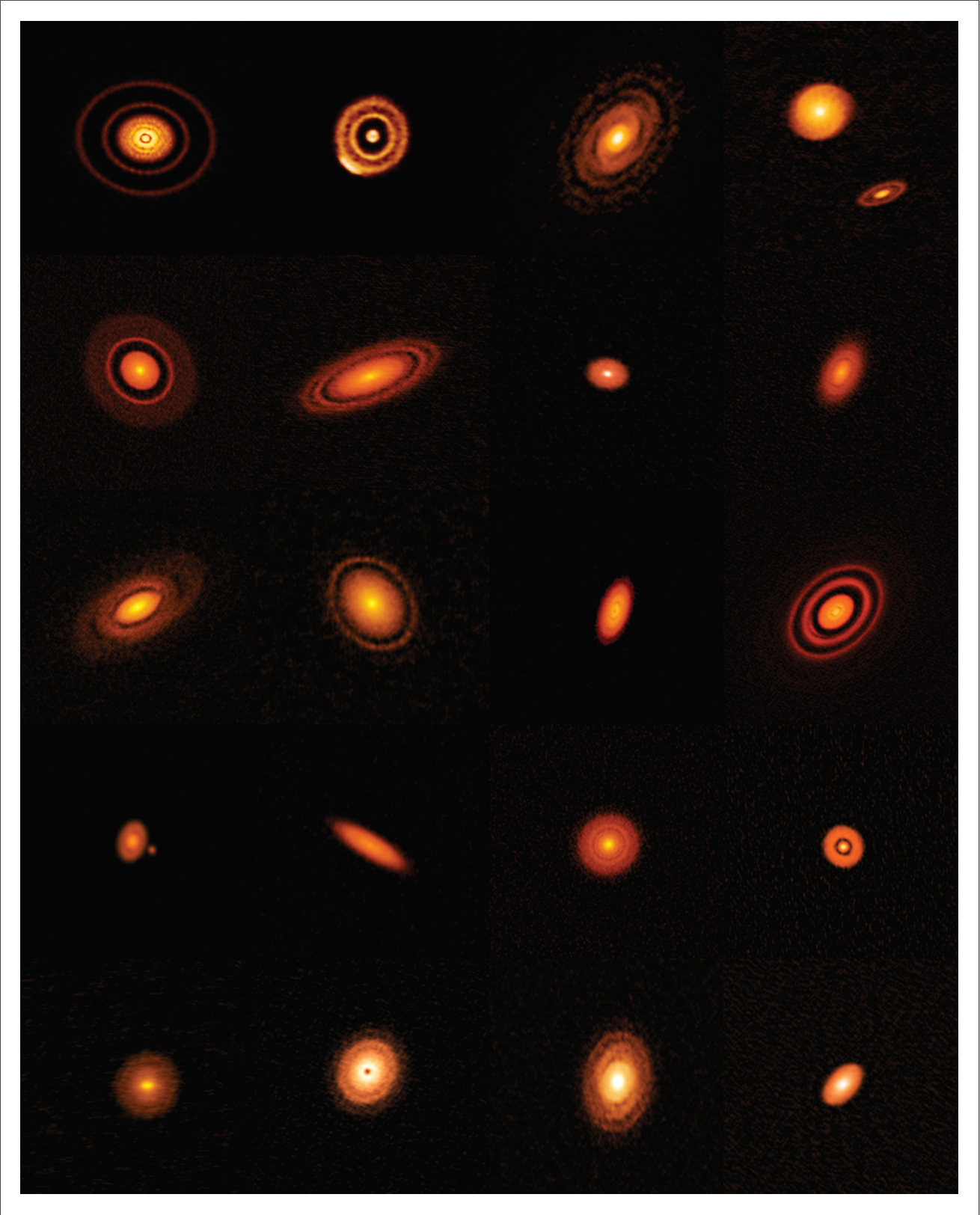
Credit: ALMA (ESO/NAOJ/NRAO), S. Andrews et al.; NRAO/AUI/NSF, S. Dagnello
These planetary disks are a familiar sight to astronomers. Just about every newborn star has one. Some of them are long-lived. They can last for a substantial part of a stars' infancy. They also have with dramatic jets of matter. These are fired like a laser beam from the poles of a baby star. These disks are an essential stage of development. The gaps that appear in the disk identify planets. Astronomers have detected giant planets around nearly every newborn star discovered. You can see a giant Jupiter like planet in the example below. It is visible to the right of the central material that is building up a new star.
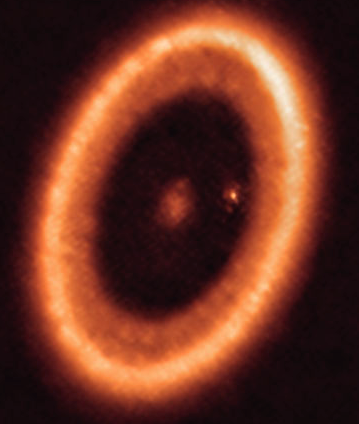
Planets can form without a star or be ejected from their birth solar system. They are then doomed to wander through deep space. However, they usually form around a star and from the same materials. They remain in the same plane of rotation as their parent disc. The photos of these planetary disks show how our own solar system once formed. As well as the planets and stars being made within them. Astronomy is one path to understanding how our universe functions. Also, the ways in which it is different to God’s original plan for a balanced creation.
Our creation is vastly different from God’s undamaged creations. This creation is truly flawed, from creatures up to solar systems, in time, everything falls into decay and ruin. Our sun has the same deep history as all other stars in this fallen universe. It is part of a history that is complex, chaotic and flawed. It's foolish to distort science. To either try to fit it into the traditional understanding of Genesis or to reject science entirely. We should accept the details of history.
This evidence is all addressed in my book. It confirms the accuracy and value of the Bible. Not just as a guide to salvation but as a true history. Genesis can be understood by looking beyond the walls of Eden to understand the origin of the whole universe.